Looking for heavy cream in a Czech supermarket? Start with products labeled smetana ke šlehání, then check the fat percentage. English recipe terms such as heavy cream, double cream, and half-and-half do not always have an exact Czech equivalent.
This guide explains which cream to choose for whipping, cooking, or baking, how to recognize the packages, and what to check when substituting Czech products in your recipes. You will also find a quick guide to other Czech dairy labels, including milk, sour cream, and tvaroh.
If you are still trying to figure out which grocery chain fits your budget, make sure to read Supermarkets in Czech Republic: Which is the Best. For navigating the capital specifically Where to Buy Groceries in Prague: All you Need to Know.
If you are shopping in Czechia for the first time, guide to Czech supermarket rules explains loyalty prices, produce scales, checkout procedures, and bottle returns.
Czech Cream Labels: Whipping, Cooking, and Sour Cream
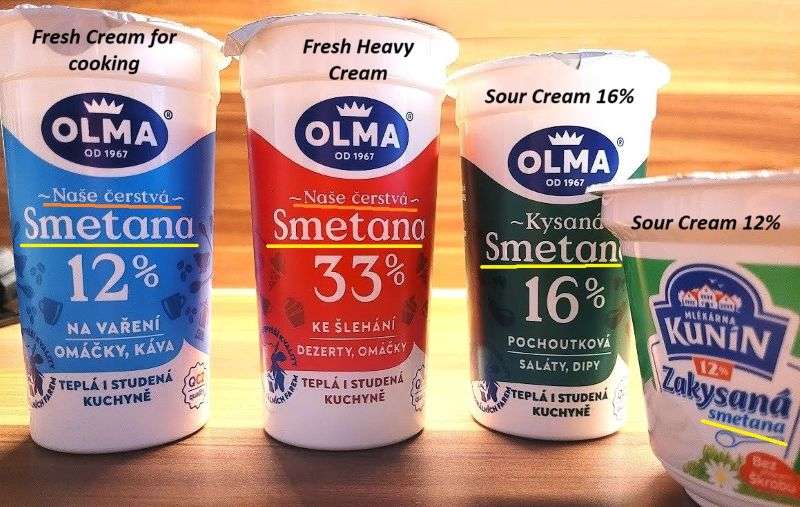
In Czech, smetana means cream. To choose the right product, check the full name on the package and the fat percentage. Packages vary between brands, so their shape or color alone will not tell you what is inside.
| What you need | Czech label to look for | Fat content | Main uses |
|---|---|---|---|
| Whipping cream | Smetana ke šlehání | Commonly 31–33%; 40% options also exist | Whipped toppings, desserts, and rich sauces |
| American heavy cream | Smetana ke šlehání, checking the percentage | American heavy cream contains at least 36% fat | Choose a higher-fat option when the recipe needs the richness of heavy cream |
| Cooking cream | Smetana na vaření | Commonly 10–12% | Soups, sauces, and other dishes that do not require whipping |
| Sour cream | Zakysaná smetana | Varies; examples include 12%, 15%, and 20% | Dips, toppings, and dishes needing a tangy flavor |
Heavy Cream in Czech: Which Product Should You Choose?
Look for smetana ke šlehání, meaning whipping cream. You may also see šlehačka on the package. For whipped toppings, Czech 31–33% whipping cream is a suitable choice. Chill it before whipping and follow the instructions on the package.
However, 31–33% whipping cream is lower in fat than American heavy cream, which contains at least 36%. If your recipe depends on a higher fat content, look for a richer option, such as Kunín Šlehačka De Luxe 40%. Substituting a lower-fat cream may change the thickness or texture of the finished dish.
Start in the refrigerated dairy section, where you will usually find smetana ke šlehání. In my experience, long-life cream is less common, especially in smaller stores. If you choose a long-life product, check both its fat percentage and whether it is labeled for whipping.
For recipes calling for whipping or heavy cream, choose liquid cream rather than ready-whipped cream in a spray can.
Cooking Cream: Smetana na vaření
Smetana na vaření is a lower-fat cream commonly used in soups and sauces. It will not whip into a fluffy topping.
If a recipe specifically calls for heavy cream, cooking cream may produce a thinner, less rich result. Whipping cream can also be used in cooking—the name does not mean it is only for desserts.
When adding cream to a hot dish, reduce the heat and stir it in gently. Avoid a strong boil, especially with lower-fat cream.
Sour Cream: Zakysaná smetana
Zakysaná smetana is fermented cream with a tangy flavor. Use it for dips, baked potatoes, toppings, or recipes that specifically call for sour cream.
It is different from liquid whipping or cooking cream. If you accidentally buy it for a recipe that needs plain cream, it will change the flavor and consistency.
What About Double Cream and Half-and-Half?
British double cream contains at least 48% fat. Czech 40% whipping cream is a richer local option, but it is still lower in fat and is not an exact equivalent. Whether it works as a substitute depends on the recipe.
American half-and-half is a mixture of milk and cream. Czech 10–12% cooking cream has a similar fat content to some half-and-half products and may work for coffee or certain recipes, but it is not the same product. It is also lower in fat than British single cream, which contains at least 18%.
Shopping tip: Packaging differs across brands such as Madeta, Olma, and Kunín. Focus on the Czech product name and fat percentage. You can also search for “smetana” on Kupi.cz to compare advertised products and offers.
All-Purpose Cream: What to Choose in Czech Stores
If your recipe calls for all-purpose cream, such as Nestlé cream used in Filipino recipes, choose a Czech substitute according to how the cream is used. There is no single Czech label that guarantees an exact match.
- For whipping or fluffy dessert fillings: Look for smetana ke šlehání, commonly with 31–33% fat. Chill it before whipping.
- For rich sauces, soups, or creamy pasta: Whipping cream is also a useful option. Smetana na vaření can work when a lighter result is acceptable, but its lower fat content may make the dish thinner.
- For no-bake desserts: Check whether the recipe whips the cream or simply mixes it with other ingredients. Czech whipping cream may work, but differences in fat content and consistency can affect how firmly the dessert sets.
If the recipe names a particular brand of all-purpose cream, check that product’s ingredients and fat percentage before choosing a substitute. Zakysaná smetana is sour cream and will add a tangy flavor, so it is not a direct replacement for plain all-purpose cream.
Milk in Czech: Labels and Fat Percentages
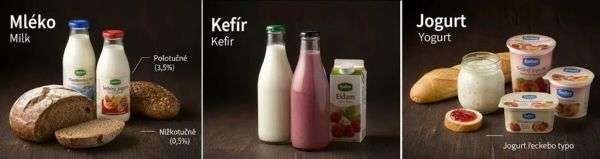
Milk is called mléko in Czech. To choose the type you need, check the name and fat percentage on the package. Label and cap colors vary between brands.
| Czech label | English meaning | Typical fat content |
|---|---|---|
| Plnotučné mléko | Whole milk | 3.5% |
| Polotučné mléko | Semi-skimmed milk | 1.5% |
| Nízkotučné mléko | Low-fat milk | 0.5% |
If a recipe calls for whole milk, look for plnotučné mléko. For drinking, cereal, or coffee, choose according to your preference.
Fresh vs. Long-Life Milk
Besides the fat percentage, check whether the milk is fresh or long-life:
- Čerstvé mléko (fresh milk): Sold in the refrigerated dairy section. Keep it refrigerated and check the use-by date.
- Trvanlivé mléko (UHT or long-life milk): Usually sold in cartons on shelves outside the refrigerated section. It can be stored unopened at room temperature according to the package instructions.
Once opened, both types need refrigeration. Follow the instructions on the package for how soon to use them.
Fermented Milk Drinks: Kefír, Acidofilní mléko, and Podmáslí
In the refrigerated dairy section, you will also find several tangy milk drinks. Their names tell you which type you are buying. Some fermented milk drinks also come in sweetened or fruit-flavored versions, such as strawberry (jahoda), apricot (meruňka), or forest berries (lesní plody).
For cooking or baking, choose a plain, unsweetened version, unless the recipe says otherwise. Look for bílé (plain) or neochucené (unflavored), and check the ingredients for cukr (sugar).
Kefír and Acidofilní mléko
- Kefír / Kefírové mléko: Fermented milk drinks made with cultures containing bacteria and yeasts. They have a tangy flavor and come in plain and flavored versions.
- Acidofilní mléko: A fermented milk drink made with cultures that include Lactobacillus acidophilus. It is similar to kefir, but uses different cultures. Taste and thickness vary between products.
For an unflavored version, look for bílé or neochucené. Fruit-flavored drinks may contain added sugar, so check the ingredients if that matters to you.
Podmáslí and Kysané podmáslí: Buttermilk
Podmáslí means buttermilk—traditionally, the liquid left after cream is churned into butter.
Kysané podmáslí means cultured buttermilk. It has been fermented with bacterial cultures, giving it a tangy flavor. You may also see the words in the opposite order: podmáslí kysané.
If an English-language recipe calls for cultured buttermilk, look for plain kysané podmáslí. It is useful for pancakes, muffins, and other baking recipes that need acidic buttermilk.
A package may emphasize only podmáslí on the front, so check the full description rather than assuming it is unfermented.
Tvaroh: What It Is and Which Type to Choose
Tvaroh is a fresh curd cheese, often translated as quark. It has a mildly tangy flavor and is widely used in Czech cakes, pastry fillings, spreads, and sweet dumplings. You will find it in the refrigerated dairy section.
Soft vs. Firm Tvaroh
| Czech label or package | What to expect | Common uses |
|---|---|---|
| Tvaroh měkký — soft tvaroh, often in a plastic tub | Usually smooth and easy to mix | Dessert fillings, dips, and spreads |
| Tvaroh měkký in a wrapped block | Often firmer and drier than the tub version | Baking, pastry fillings, and dough |
| Tvaroh tvrdý / na strouhání — hard tvaroh / for grating | Dry and crumbly | Grating over sweet fruit dumplings |
A wrapped block is not necessarily hard tvaroh. Check the label: soft tvaroh can also come in this packaging.
For baking, follow the texture specified in the recipe. A wetter tub version may make a filling or dough softer than a firmer block.
Understanding the Fat Labels
You will also see these words:
- Tučný: Full-fat tvaroh.
- Polotučný: A medium-fat version.
- Odtučněný: A very low-fat version.
These describe fat content, rather than whether the tvaroh is soft or hard. Full-fat versions generally give a richer result; check the package for the actual fat percentage.
Is Tvaroh the Same as Cottage Cheese or Cream Cheese?
Not exactly. Cottage cheese, also sold under that name in Czech stores, has small, soft curds in a creamy liquid. When drained and pressed together, those curds can resemble firmer tvaroh. However, the products may differ in salt content, flavor, and moisture, so they are not always interchangeable in recipes.
Tvaroh usually has a smoother or more compact texture, depending on the type. They are different products, so substituting one for the other can change the texture and moisture of a recipe.
Tvaroh works well in recipes designed for quark or tvaroh. It can be used in some cheesecakes and fillings, but replacing cream cheese or cottage cheese may change the flavor, moisture, and texture. Avoid assuming it is a direct substitute in every recipe.
For cooking and baking, choose plain tvaroh unless the recipe calls for a sweetened or flavored product. Fruit and vanilla versions, as well as tvaroh-based desserts, are also sold nearby.
Tvarohové Pomazánky: Tvaroh-Based Spreads
Tvaroh is also used to make pomazánky, savory spreads served on bread or rolls. Tvaroh-based versions are often mixed with chives, garlic, onions, or other seasonings.
For making a spread at home, smooth tvaroh in a tub is easy to mix. You can also find ready-made spreads in the refrigerated section—look for tvarohová pomazánka and check the ingredients and flavor on the package.
Cheeses You Will See in Czech Stores
Alongside milk and cream, you will find these familiar names in the cheese section:
- Hermelín: A Czech Camembert-style cheese with a white mold rind and a soft interior. You can eat it as it is, grill it, or try nakládaný hermelín—cheese marinated in oil with spices, often served in Czech pubs.
- Eidam: A mild Edam-style cheese sold in blocks or slices. Plátkový means sliced. It is commonly used for sandwiches and smažený sýr, Czech fried cheese.
- Olomoucké tvarůžky: A traditional Czech ripened curd cheese with a strong aroma, a distinctive savory flavor, and very little fat. Despite the similar name, it is quite different from plain tvaroh.
- Niva: A Czech blue cheese with blue-green veins and a strong, salty flavor. It can be eaten with bread, crumbled into salads, or used in sauces. Different versions vary in richness and texture.
Other Cheese Labels You May See
- Tavený sýr: Processed cheese, often sold in foil-wrapped portions or tubs. Spreadable versions are commonly used on bread.
- Uzený sýr: Smoked cheese. This describes its flavor and preparation rather than one particular cheese type.
- Salámový sýr: Cheese shaped like a sausage, often sold whole or sliced. Some versions are smoked. Despite the name, it does not necessarily contain salami—check the ingredients for added meat.
- Sýrová roláda: A cheese roll with a filling. Ingredients vary, so check the label to see what is inside.
- Sýrové nitě / sýrové nudle: Thin cheese strings or strands, often eaten as a snack. Korbáčiky are braided cheese strings. You may find both uzené (smoked) and neuzené (unsmoked) versions.
Cheeses and cheese spreads also come with added flavors. Useful words include s ořechy (with nuts), s pepřem (with pepper), s bylinkami (with herbs), and s chilli (with chili). Pálivý means hot or spicy.
A note about fat percentages: Cheese labels may show tuk v sušině, sometimes abbreviated t. v s., meaning “fat in dry matter.” This excludes the cheese’s water content, so it is different from the fat percentage shown on milk or cream. To compare actual fat content, check tuky per 100 g in the nutrition table.
Butter: Máslo
Máslo means butter. Standard butter commonly contains 82% fat and is sold in the refrigerated dairy section. For recipes calling for butter, check that the package says máslo, rather than margarine or another spread.
Still Navigating the Grocery Aisles?
Mastering the dairy section is just the first step. If you need to decode the flour aisle (which is ground entirely differently than in the UK or US), buy the correct bread rolls, or figure out if you are paying per item or per kilo at the weighing station, check out our master pillar guide: Local Products & Their Names: What You Need to Know for Food Shopping in Czechia.