Czech menus can be confusing—even if translated. What is hotová jídla? Why do you need to order side dishes separately? And what should you actually try without wasting money?
🍖Czech Typical Food You Must Try
What you should try in Czech:
- Svíčková (creamy beef with dumplings)
- Guláš (Czech-style goulash)
- Vepřo knedlo zelo (pork, dumplings, cabbage)
- Řízek (Czech schnitzel)
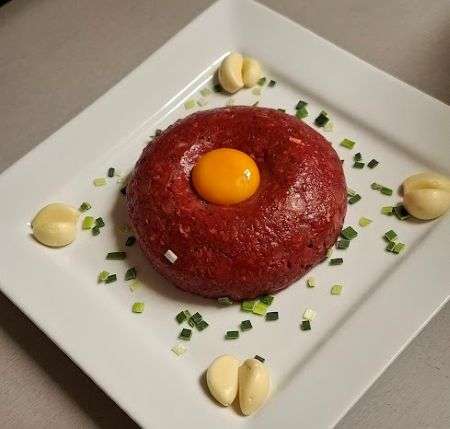
- Tatarák (marinated minced raw beef with special additions) you can see one on the photo.
🧾 How a Czech Menu is Structured
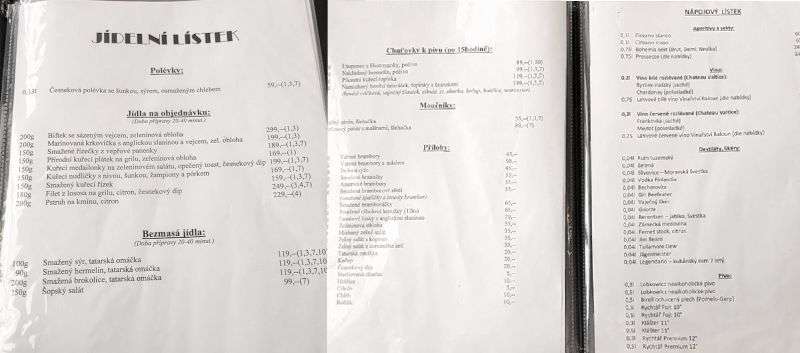
Standard menus follow a logical flow. If you are looking for a quick, traditional lunch, look for the “Denní menu” (Daily menu) or “Hotovky” (Ready meals). These are the dishes the chef has already prepared, meaning they are fresh, authentic, and served almost instantly.
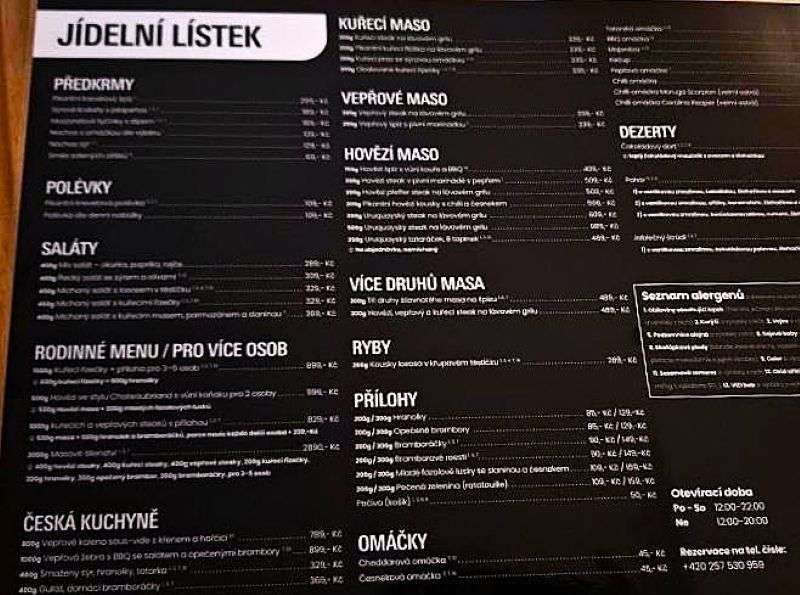
Dezerty – Desserts
Předkrmy – Starters
Polévky – Soups
Hlavní jídla – Main dishes
If you want to better understand how locals eat, check out this guide on Czech restaurant etiquette: how to order, pay & tip.
🥗Starters (Předkrmy)
While old-school pubs still serve pickled sausages, modern Czech dining has moved toward richer, warm appetizers. These are much more common in popular spots like Lokál or Kantýna.
- Pečená morková kost (Roasted Bone Marrow): A trendy but traditional delicacy. It is served hot with toasted bread and a parsley salad; you scoop the rich marrow out and spread it like butter.
- Pražská šunka (Prague Ham): High-quality, chilled ham often served with a dollop of fresh horseradish cream (křen). It’s light, simple, and very classic.
- Chlebíčky (Open-faced Sandwiches): While often found in delis (Lahůdky), these are the quintessential Czech appetizer. They are small slices of baguette topped with potato salad, ham, egg, and pickles.
🍲Soups (Polévky)
In a Czech restaurant, the soup is the “foundation” of the meal. You will almost always see a clear broth and a thick, creamy option on the daily menu.
- Vývar (Broth): Usually Hovězí (beef) or Kuřecí (chicken). It is a clear, comforting soup served with fine noodles and small liver dumplings (játrové knedlíčky).
- Česnečka (Garlic soup): A powerful broth with potatoes and melted cheese—the legendary local cure for a hangover.
- Kulajda (Dill soup): A thick, creamy potato and mushroom soup flavored with fresh dill and topped with a poached egg.
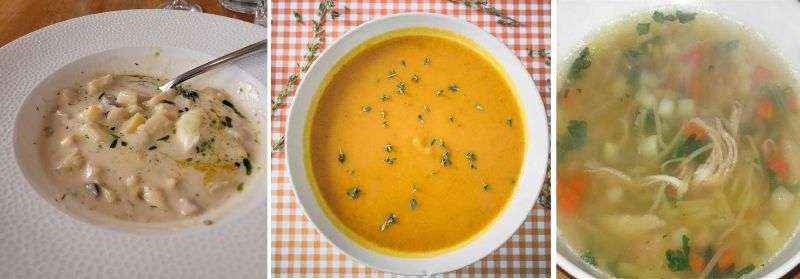
Local Insight: While these three are the most common, you will frequently see seasonal cream soups like Dýňová (pumpkin), Houbová (mushroom), or Bramborová (potato). Personally, I love making pumpkin and mushroom soup at home. Even if you aren’t usually a fan of pumpkin, the Czech version is something very special!
Pro-Tip: Want to try Czech snacks or find the best local beer to take back to your hotel? Don’t miss our article on Local Products & Their Names: What You Need to Know for Food Shopping in Czechia
Hlavní jídla (Main Dishes): Traditional Czech Main Courses
- Tatarák (Steak Tartare)
- Raw minced beef, served fresh
- You season it yourself
- Eaten with fried bread (topinky) rubbed with garlic
- A classic Czech pub specialty
- Svíčková
- Beef (sometimes pork) in a thick, creamy vegetable sauce
- Served with bread dumplings
- Often comes with cranberry jam and whipped cream
- One of the most traditional Czech dishes
- Pečená kachna (Roast Duck)
- Roasted duck (quarter or half portion)
- Served with red cabbage
- Comes with both potato and bread dumplings
- Moravský vrabec (Moravian Sparrow)
- Roasted pork chunks (not actually a bird)
- Served with potato dumplings
- Rich brown sauce with strong flavor
- Vepřové koleno (Pork Knee)
- Large roasted pork knee with crispy skin
- Usually shared due to size
- Served with mustard, horseradish (křen), and sauerkraut
The “Sweet” Main Course
Ovocné knedlíky (Fruit Dumplings)
- Sweet, soft, and very filling
- Large dumplings filled with fruit (strawberries, apricots, or plums)
- Served as a main course, not a dessert
- Topped with melted butter and sugar
- A surprising choice for tourists expecting savory meals
If you are traveling on a budget, here’s how to actually find cheap restaurants in Prague.
🍺Drinks (Nápoje)
You cannot talk about authentic Czech food in Prague without the beer. It is often cheaper than water and treated with immense respect.
- Pivo (Beer): Look for “Tankové pivo” (Tank beer) for the freshest taste.
- Kofola: A local herbal cola with a licorice-and-clove flavor.
- Svařák: Spiced mulled wine, the go-to drink for chilly evenings.
- Víno: While Prague is a beer city, Moravian wine is excellent and widely available.
🍽️The Heart of Czech Cuisine: Meat, Sauces, and Potatoes
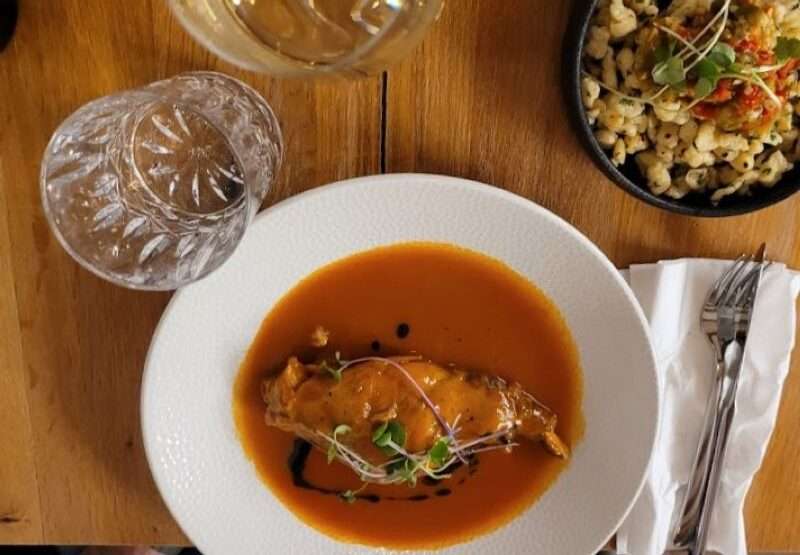
In Czech typical food, you’ll quickly notice that a side dish is often served right in the sauce—this is a signature feature of Czech traditional cuisine and how locals enjoy their main meals. Sauces are rich, flavorful, and usually paired with dumplings or potatoes to soak up every bit.
🥔Potatoes & Co
Potatoes are a cornerstone of Czech cuisine, served in various traditional forms and often paired with the country’s love for fried dishes.
Traditional Preparations:
- Mashed (bramborová kaše)
- Boiled (vařený brambor)
- Dumplings (bramborové knedlíky)
- Bread (bramborový chleba)
- Pancakes (bramboráky)
🍟Side Dishes – Fried Favorites
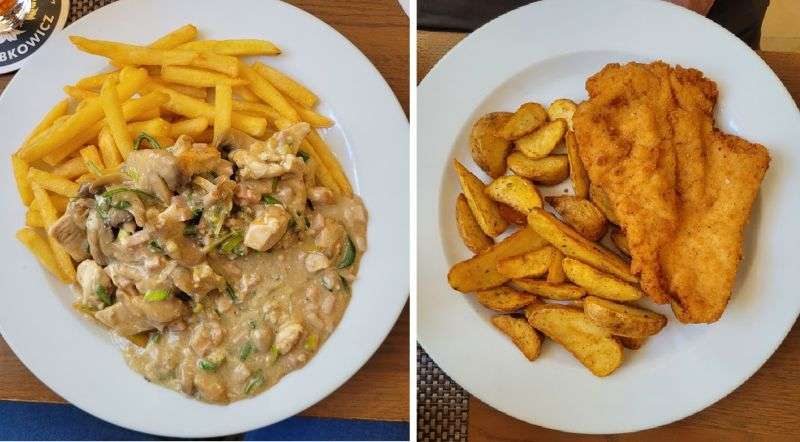
Common Sides: Most menus feature Hranolky (French fries) or Americké brambory (seasoned, skin-on potato wedges) as popular alternatives to traditional boiled potatoes or dumplings.
One of the most popular Czech dishes is řízek (schnitzel). The most common:
- Chicken (Kuřecí)
- Turkey (Krůtí)
🍄🟫Local Secret: The “Forest Steak”
While many restaurants serve standard meat, the true peak of Czech “schnitzel culture” happens during foraging season. Locals hunt for the Pravý hřib (the “King of Mushrooms” or Pravák) and the Bedla (Parasol mushroom). When these grow to the size of a dinner plate, they are sliced into thick, meaty “steaks,” prepared via the Třiobal method, and fried.
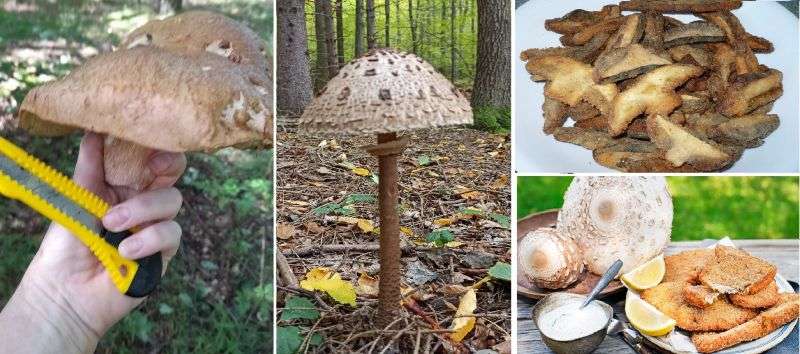
This seasonal delicacy is a prized alternative to meat, offering a rich, earthy flavor that locals consider a national treasure.
Traditional Czech Řízek is prepared using the Třiobal (triple-coat) method: meat or mushrooms are dredged in flour, dipped in beaten eggs, and coated in strouhanka (breadcrumbs from dried rohlík rolls) before being fried in hot oil for a signature “crunchy outside, soft inside” texture.
The “Babička” Standard Ask any Czech: the best řízek isn’t made in a modern fryer. It’s fried in a pan of hot sádlo (pork fat). This old-school method is the “secret weapon” of Czech grandmothers, ensuring the strouhanka (breadcrumbs) stays crispy without soaking up the grease like vegetable oil does.
FAQ About Czech Typical Food and Meals
What does “hotová jídla” mean in Czech food?
Hotová jídla are ready-made meals that are cooked in advance and served quickly. They are common in daily Czech cooking, especially for lunch.
What are “minutky” in Czech cuisine?
Minutky are freshly prepared meals made to order. They usually take longer to prepare and are often simpler dishes like grilled meat or fried food.
What is a typical Czech meal?
A traditional Czech meal often includes:
- soup as a starter
- a main dish with meat, sauce, and dumplings
Lunch is usually the main meal of the day.
Why are dumplings so common in Czech food?
Dumplings (knedlíky) are used to absorb sauces. Since many Czech dishes are served with rich sauces, dumplings are a practical and traditional side.
Is Czech food always heavy?
Traditional Czech meals are usually heavy and filling, with meat, sauces, and dumplings. However, lighter options are becoming more common today.
What is the difference between Czech goulash and Hungarian goulash?
Czech guláš is thick and served with dumplings, while Hungarian goulash is more like a soup. The Czech version is richer and less spicy.
Are sweet dishes eaten as a main meal in Czech cuisine?
Yes, some sweet dishes—like fruit dumplings (ovocné knedlíky)—are often served as a main course, not just dessert.
What are the most common meats used in Czech food?
The most common meats are:
- pork
- beef
- chicken
Pork is especially popular in traditional dishes.
✅Final Tips for Tourists
- The Garlic Trick: If you order Tatarák, rub the raw garlic clove onto the rough surface of the fried bread until the clove literally wears down into the toast.
- Portion Control: Many meals are very large. For example, Vepřové koleno – classic Czech dishes- is often over 1kg—enough to feed two or even three people!
- How to order: I usually order a soup and then choose either an appetizer or a main course depending on how hungry I am. For a younger man with a big appetite, a starter and a main might work, but always check the “grammage” (weight) on the menu first!