When you first go grocery shopping in the Czech Republic, you may feel a bit lost. This Czech food vocabulary list will help you understand what to buy. Many products look familiar, but their names are different — and sometimes even the taste is not what you expect. This article will help you learn the most common food products in Czech shops, along with their names in both Czech and English.
Czech Food Vocabulary List for Bread and Bakery (Chléb a pečivo)
Bread is very important in the Czech diet. You will see many types in the bakery section.
- Chléb – bread, often darker and heavier than in Western Europe. Many are made from rye (žitný) or a mix of wheat and rye. Czech bread often contains caraway seeds.
- Rohlík – the most popular Czech bread roll, white and soft. Very cheap and eaten daily. Good for sandwiches, with meals, or with jam.
- Houska, kaiserka – other types of bread rolls, sometimes with poppy or sesame seeds. They can be wheat or mixed with other grains. These rolls go well with both sweet and savory products, perfect for sandwiches.
- Bageta – baguette, usually white bread.
- Koláč – sweet pastry with fruit, poppy seeds, or cheese (tvaroh).

Tips:
- Czech bakeries also sell many small pastries for snacks. They are fresh and cheap, great for breakfast on the go or a quick bite.
- Rohlík, houska, kaiserka, and bageta – all of these are types of bread, and you can use them for sandwiches or with meals.
Names for Milk and Dairy in the Czech Language (Mléko a mléčné výrobky)
In Czech shops you will see many dairy products with different fat levels.
- Mléko – milk:
- Plnotučné (3,5 %) – whole milk
- Polotučné (1,5 %) – semi-skimmed, the most popular
- Nízkotučné (0,5 %) – low-fat
- Jogurt – yogurt, available plain (bílý) or with fruit.
- Selský jogurt – farmer’s yogurt, usually thicker and less liquid.
- Jogurt řeckého typu – Greek yogurt, contains more protein than regular yogurt.
- Smetanový jogurt – creamy yogurt, fattier but tastier.
- Kefír – fermented milk drink with a sour taste, very common. It can be plain or fruit-flavored. Some shops also sell acidofilní mléko, another fermented milk drink with different bacteria.
- Sýr – cheese. You will find hard cheeses (eidam, gouda) and soft cheeses.
- Tvaroh – a product between cottage cheese and cream cheese. Used in cooking, cakes, or eaten with sugar and fruit. Some people prefer tvaroh with salt and spices.

Types of tvaroh:
- Smooth paste in a plastic cup – usually eaten sweet with sugar or jam, often given to children.
- Hrudkový tvaroh – looks more like cottage cheese, sold in plastic foil packs. It comes in different textures:
- měkký – soft. This type is used for eating (often with yogurt, cream, or sour cream added) or for baking.
- jemný – medium
- tvrdý – hard. This type is used for baking.
In shops, you can find tvaroh plain, sweetened (sometimes with fruit), or salted. Salted tvaroh is often sold as pomazánky (spreads). You should have this word in your Czech Food Vocabulary List because these products are popular in the Czech Republic. They are not only tvaroh-based: many are made from soft or creamy cheeses, with added fish, spices, or bacon. Locals often use these spreads instead of butter or mayonnaise.
Meat and Sausages (Maso a uzeniny)
Czechs love meat and sausages. Here are the main names in Czech and English:
- Maso – meat
- Vepřové maso – pork, very popular
- Hovězí maso – beef
- Kuřecí maso – chicken
- Krůtí maso – turkey
- Králík – rabbit meat

Very popular in Czech cuisine are sausages, smoked meat, and ham:
- Šunka – ham
- Klobása – sausage, often smoked
- Salám – salami
- Párky – thin sausages, usually boiled in water for 2–3 minutes
Tips:
- In řeznictví (butcher shops) you can also buy ready-to-eat meat products like ham spreads or roasted meat.
- Many supermarkets sell ready-to-eat meat as well. You can find it in the “Hotovky” (ready meals) section or in refrigerated counters.
Ready-to-Eat Meals (Hotovky)
Many locals buy ready meals from supermarkets to eat at work or at home when they don’t want to cook. Common options include:
- Smažený kuřecí řízek – fried chicken cutlet with potatoes
- Červené kuřecí kari – red chicken curry with rice
- Kuřecí prsa na paprice – chicken breasts with paprika sauce and pasta
- Holandský řízek / smažený sýr – fried cheese with potatoes
- Lasagne – different varieties
- Bramborové knedlíčky – potato dumplings filled with smoked meat
- Svíčková na smetaně – beef in cream sauce, usually with dumplings (knedlíky)
- Knedlíky s jahodami nebo borůvkami – dumplings with strawberries or blueberries
- Sedlácký / hovězí guláš – beef goulash with dumplings

This is not a full list, but these are the most common hotovky in supermarkets.
A few words about the Czech specialty knedlík. This is another important word in your Czech Food Vocabulary List. It’s often translated as “dumpling,” but the taste and texture are different. It’s a national side dish, often made from potato dough, cooked in steam. Czechs eat it instead of bread to soak up sauces. And yes, Czechs love sauces – meals often “swim” in them.
Czech Food Vocabulary List: Drinks (Nápoje)
If you’d like to try Czech beer, here is your Czech Food Vocabulary List for beverages.
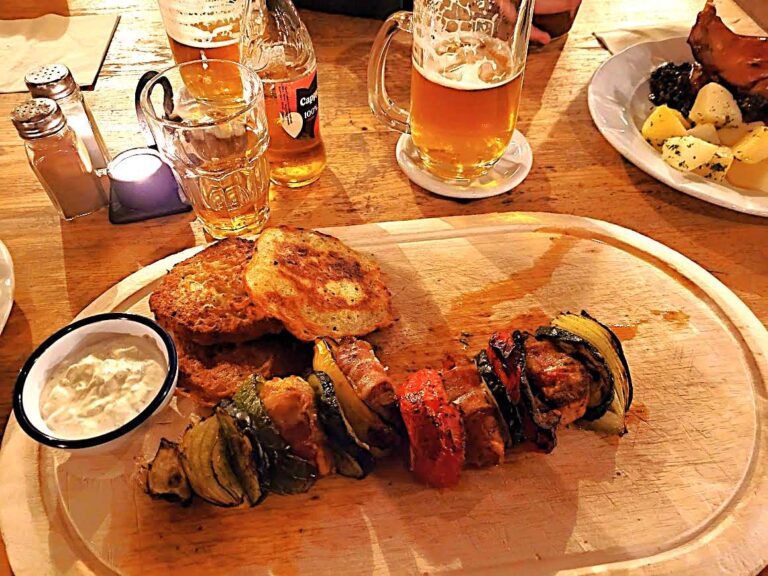
- Pivo – beer, the most famous Czech drink.
- Ležák – the most popular type of beer
- Černé pivo – dark beer, usually bitter, but some small breweries make milder versions
- Červené pivo – red beer, not common but worth trying
- Víno – wine, especially good from Moravia
- Minerálka or pitná voda – mineral water. Often carbonated (perlivá). Non-carbonated is neperlivá.
- Limonáda – lemonade or soft drink
Tips:
- For still water, look for kojenecká voda (baby water), pitná voda (drinking water), or minerální voda neperlivá (non-carbonated mineral water). The word neperlivá means “without gas.”
- Beer is marked with numbers, usually 10° or 12°. The number shows the strength (sugar content before fermentation), not exactly the bitterness. A 12° beer is stronger and fuller than a 10°.
If you want more about how to pay in Czech supermarkets read this article.
Fruits and Vegetables (Ovoce a zelenina)
- Jablko – apple
- Hruška – pear
- Banán – banana
- Brambory – potatoes
- Rajče – tomato
- Okurka – cucumber
- Paprika – bell pepper
- Cibule – onion

Tip: Many fruits and vegetables are seasonal. In summer you will see local strawberries (jahody), cherries (třešně), and plums (švestky).
Here more names you can use for shopping in the Czech language
Czech Food Vocabulary List for Other Everyday Products
- Vejce – eggs. On Czech egg cartons you will see:
- Number of eggs (6, 10, 12…)
- Size – S (small), M (medium), L (large), XL (extra large)
- Type of farming, written in Czech:
- Bio vejce → organic
- Vejce z volného výběhu → free-range
- Podestýlková vejce → barn (hens kept inside, not in cages)
- Klecová vejce → cage
- Mouka – flour. Hrubá = coarse, polohrubá = semi-coarse, hladká = fine.
- Cukr – sugar
- Rýže – rice
- Těstoviny – pasta
Final Tips for Grocery Shopping in the Czech Republic
- Learn a few basic Czech food words. It makes shopping easier.
- Try local products like tvaroh desserts, fresh bread, or Czech sausages.
- Don’t be afraid to ask shop staff or simply point at what you need – people are usually helpful