When you visit Czechia, food is often one of the highlights of the trip. From hearty Svíčková (sirloin in cream sauce) to iconic Guláš (goulash), portions are generous and the beer is world-class. However, Czech restaurant etiquette —or etiketa—can be quite different from what you might be used to back home.
Understanding the “Restaurace” vs. “Hospoda”
In the Czech language, the term Restaurace is a broad category. To eat like a local, you need to know the difference between a formal restaurant and a casual local favorite.

- Restaurace: A standard restaurant, often with white tablecloths and a full menu.
- Hospoda / Pivnice: These are traditional Czech pubs or beer halls. While they look casual, they often serve the best traditional food and daily specials (denní nabídka).
- Jídelna: A self-service cafeteria, perfect for a fast, authentic, and very cheap lunch.
You might be surprised to learn that locals often prefer this “second” type of establishment. Why? The term “restaurace” in Czech culture has a broader meaning than the usual translation of “restaurant.” It’s more about relaxing. In a hospoda or pivnice, Czech restaurant etiquette offers a much more “pohodlný” (comfortable, easy-going) atmosphere.
If you’re looking for more authentic and affordable places, check out our guide on how to actually find cheap restaurants in Prague.
How to Order: The “Relaxed” Service
Service in Czechia is famously efficient, but it can feel “cold” or even “slow” to tourists. It isn’t rude—it’s simply part of Czech restaurant etiquette. The pace is generally more relaxed, even in Prague, where everything else tends to move faster.
- Finding a Table: In casual pubs (hospoda), it is common to seat yourself. In nicer restaurants, wait for a sign that says “Prosím, vyčkejte na usazení” (Please wait to be seated).
- The “Beer First” Rule: Unlike in the US or UK, the waiter will often come to your table within 60 seconds—not for food, but for drinks. In a pub, if you don’t specify, a “large beer” (0.5L) is the default.
- The Menu Trap: If your menu is open, the waiter will stay away. Close your menu and place it on the table to signal that you are ready to order. Since service is relaxed, you need to signal when you are ready to order or need assistance: raise your hand to get attention. Any staff member can help: Even if the person you flag down is not your assigned waiter, they will call your waiter over for you.
- Tap Water (Kohoutková voda): While tap water is perfectly safe in Prague, many restaurants will charge a small fee for it or try to sell you bottled water.
Which dishes you should try in the Czech Republic? The list of traditional meals and decoding the restaurant menu read in my article “Czech Typical Food: Guide to Popular and Traditional Czech Dishes”
How to Pay in Czech Restaurant
Since Czech service is typically not rushed, your waiter won’t bring the final bill until you ask. When you are ready to pay and leave, you need to signal them.

Requesting the Bill
The bill is not brought automatically in Czech restaurants.. Even after finishing your meal and having your plates cleared, you must signal the staff.
- Getting the Bill: When you are ready, catch the waiter’s eye and say: “Zaplatím, prosím” (za-pla-teem pro-seem).
- Paying at the Table: Usually, the waiter carries a large leather wallet or a mobile card terminal to you.
- Card vs. Cash: While cards are accepted almost everywhere in Prague, many smaller towns and traditional pubs are still “Cash Only.” Always look for a sticker on the door or ask: “Berete karty?” (Do you take cards?).
- Payment Location: According to Czech restaurant etiquette payment is typically done at your table, but some establishments, especially smaller ones, prefer you pay at the cash desk.
All what you need to know about payment in Czech Republic read in our article “How to Pay in Czech Shops (2026 Guide): Cash vs. Card”
Splitting the Bill in Czech Restaurants
The standard practice is one bill for the entire table. Splitting the bill is usually not a problem. Staff may ask if you want to pay together or separately. If they don’t ask, you can simply tell them you would like to pay separately. Sometimes, staff will ask you for specific instructions on how to divide the bill.
Do You Tip in Prague? (2026 Guide)
Restaurant tipping is expected but not “mandatory” in the way it is in North America. There is no “service charge” hidden in the bill.
The Rule of Thumb: A tip of 5–10% is standard for good service. If you are just having a quick beer or the service was poor, you can pay the exact amount on the bill. No one will say anything to you.
How to Tip (The “Czech Way”)
Don’t leave money on the table. In Czechia, you tell the waiter how much you want to pay as you hand over your card or cash.
Example: Your bill is 462 CZK.
- If you want to tip: Hand over a 500 CZK note (or your card) and say “Five hundred” (pět set).
- The Waiter’s Response: They will say “Děkuji” (Thank you) and take the 500. They will not give you change back.
- The “No Tip” Mistake: If you hand over 500 CZK and say “Děkuji” (Thank you) immediately, the waiter assumes you are saying “keep the change.” Only say thank you AFTER you get your change if you don’t intend to tip.
| Bill Amount | Tip (approx 10%) | What to say/pay |
| 85 CZK | 5 CZK | “90 CZK” |
| 270 CZK | 30 CZK | “300 CZK” |
| 1250 CZK | 100-150 CZK | “1350 / 1400 CZK” |
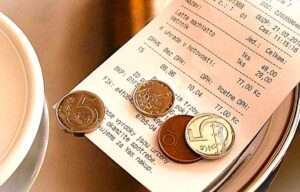
Tip in Restaurant Rules: Cash vs. Card
The method of payment affects how you deliver the tip:
- Paying with Cash: You must verbally tell the waiter the total amount you want to pay (bill + tip).
- Example: If the bill is 470 CZK, you say “Five hundred” and hand them a 500 CZK note. The waiter will keep the difference as the tip. Do not leave the change on the table.
- Paying with Card: When paying by card, you have two main options:
- Tell the total: Inform the waiter of the combined total (bill + tip) before they process the payment.
- Use the terminal: In some restaurants, the staff will let you enter the desired total amount (bill + tip) directly into the card terminal yourself.
- Mixed Payment: It’s also common to pay the bill amount with a card and leave the tip separately in cash.
Czech Restaurant Etiquette: Summary Checklist for your Visit
- Don’t wave frantically: A simple nod or a slightly raised finger is enough to get a waiter’s attention.
- Bread on the table: Sometimes baskets of pretzels or bread are on the table. Check the menu; these are usually not free and you will be charged for it.
- Shared Tables: In crowded beer halls (like Lokál or U Fleků), it is normal for strangers to ask, “Je tu volno?” (Is this spot free?) and sit next to you.
Discover what Wikipedia telling about Czech Cuisine.