Will you need passport control at Prague Airport, and how much time should you allow? The answer depends on where your flight comes from or goes to, while your citizenship and residence status affect which checks apply to you.
This guide explains the difference between the terminals, what happens when you arrive or depart, and how the Entry/Exit System (EES) may affect your journey.
Do You Need Passport Control at Prague Airport?
For regular passenger flights, the main distinction is Schengen versus non-Schengen, rather than EU versus non-EU. For example, flights between Prague and Germany, France, or Spain normally use Terminal 2. Flights between Prague and the UK or Ireland use Terminal 1. Ireland is an EU country, but it is outside the Schengen Area.
Your passport does not determine your terminal. An EU citizen arriving from London still passes passport control. A non-EU citizen arriving from Paris normally does not pass a routine border check in Prague.
| Your flight | Usual terminal | Passport control in Prague |
|---|---|---|
| To or from a country within the Schengen Area | Terminal 2 | Normally no routine border control |
| To or from a country outside the Schengen Area | Terminal 1 | Yes, on arrival and departure |
Airlines may still check your travel documents on Schengen flights. Always bring the documents required for your nationality and journey, and check the terminal shown for your flight. More details about regular and charter flights
Terminal 1: Arrival and Departure Procedures
Terminal 1 handles flights to and from countries outside the Schengen Area. You pass passport control both when arriving and when departing, but the steps and counter categories differ. Your passport and residence status determine whether you use an automatic gate, go directly to a staffed counter, or complete EES registration first.
Arriving at Terminal 1: From the Plane to the Arrivals Hall
After arriving on a non-Schengen flight, follow the signs toward passport control and baggage reclaim. Where you go first depends on your passport and residence status.
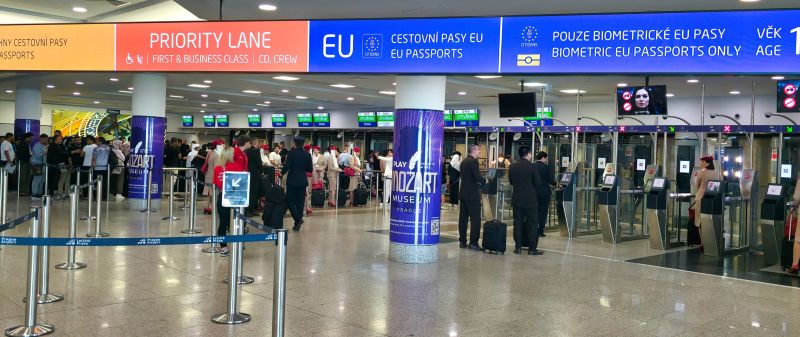
- EU, EEA, and Swiss citizens with biometric passports: If you are older than 15, you can go directly to the EasyGo automatic passport-control gates, without using an EES kiosk. Scan the passport page with your photo and follow the instructions for the camera check. When the check is successful, the gate opens and you can continue toward baggage reclaim. If the automatic check fails, go to a staffed passport-control counter. Travelers who cannot use the automatic gates should use the EU/EEA/CH counters.
- Non-EU citizens with a valid residence permit or long-stay visa issued by a country using EES: Go directly to the staffed passport-control counters, without using the EES kiosks. Have both your passport and your residence document ready.
- Non-EU visitors covered by EES: First use an EES self-service kiosk. Scan your passport and follow the screen instructions to take a facial photo and scan your fingerprints when requested. After completing this step, join the line for the staffed passport-control counters. Using the kiosk does not replace the check by a border officer.
Some passengers are exempt from using the kiosks, including young children and travelers without biometric passports. Follow staff instructions if this applies to you.
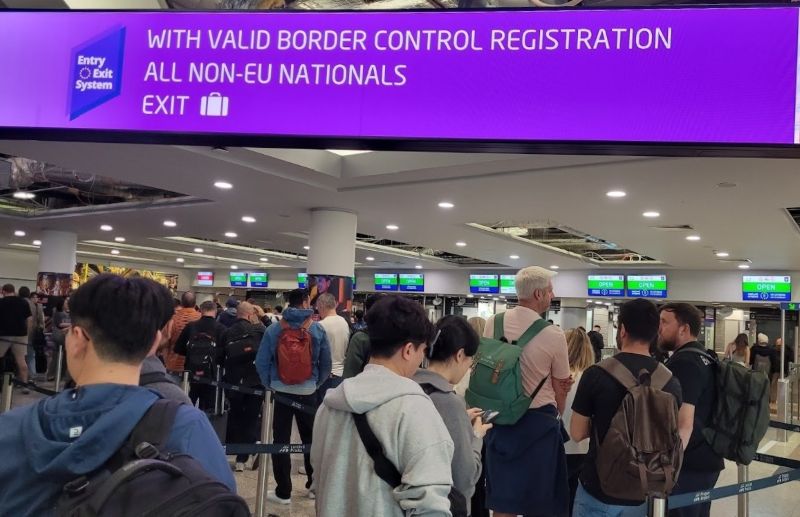
⚠️ In the arrivals area, the staffed counters are divided into EU/EEA/CH and non-EU passport lines. During my arrival, there was no separate counter category for residence-permit holders.
After passport control, collect your checked baggage, if you have any, then pass through customs into the public arrivals hall. If you travel with hand luggage only, continue toward the customs exit without stopping at baggage reclaim.
Departing From Terminal 1: From Check-in to Your Gate
If you leave Prague on a non-Schengen flight from Terminal 1, you pass passport control before reaching the departure-gate area. The usual order is:
- Check in and drop off checked baggage, if needed.
- Scan your boarding pass at the entrance gates and follow the instructions shown. Some passengers can continue through, while others are directed to the staffed passport-control counters. If the gate shows a red light and directs you to a counter, follow that instruction.
- If directed to a counter, choose the appropriate line for your documents. Have your passport and any residence permit ready. Travelers covered by EES may also need a facial image and fingerprint check. After the officer completes the checks, you can continue into the departure-gate area.
💡 My experience: When I departed from Prague on September 2026, the entrance gate directed me to the passport-control counters. I joined a line indicated for residence-permit holders, where the officer checked my passport and residence card before letting me through. In neighboring lines, I saw other passengers having their photos and fingerprints taken.
If you have checked in online and travel with hand luggage only, you can usually go directly toward passport control. However, follow any airline instruction requiring a document check at its counter first.
Passing passport control does not mean all your checks are finished. At Terminal 1, security screening of you and your hand luggage takes place at the gate, so allow time for that too.
Which Passport Control Line Should You Use?
On arrival at Terminal 1, the staffed counters have two main categories: EU/EEA/CH and non-EU passports.
- Biometric-passport holders can use the EasyGo gates.
- Non-EU residence-permit holders skip the EES kiosks and go directly to the non-EU counters, with their passport and residence document ready.
- Non-EU passengers first go to the EES-kiosks, then to the counters.
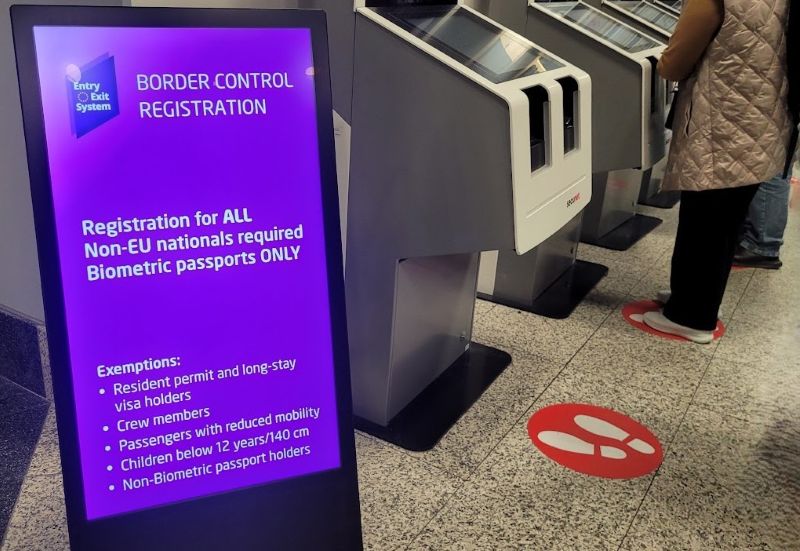
On departure from Terminal 1, the counter categories are different: there are three types, including a separate line for residence-permit holders. Check the signs above the counters and choose the line that matches your documents.
Follow airport staff instructions if they direct you to another counter.
Can Your Passport Be Checked at an Automatic Gate?
Automatic passport-control gates are available at Terminal 1 both when arriving in Prague and when departing on a non-Schengen flight. Eligible passengers can use them instead of a staffed passport-control counter. These automatic passport-control gates are called EasyGo Gates. According to Prague Airport’s guidance, these gates are available to EU, EEA, and Swiss citizens older than 15 who hold a biometric passport.
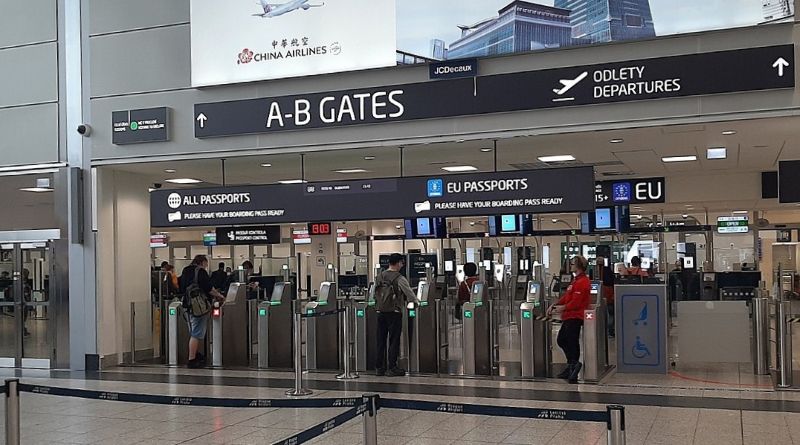
You scan your passport, then follow the instructions for the camera to check your identity. If the check is successful, the gate opens. If you cannot use an automatic passport gate, go to a staffed passport-control counter.
ℹ️ These are not the entrance gates where you scan your boarding pass, and they are not the EES registration kiosks.
Terminal 2: Arriving and Departing on Schengen Flights
Terminal 2 handles flights within the Schengen Area. You normally do not pass routine passport control or complete EES registration here, regardless of your nationality.
- Before departure: Check in and drop off any checked baggage, scan your boarding pass at the entrance gates, and pass through the central security checkpoint. Then continue to your departure gate.
- On arrival: Follow the signs to baggage reclaim, collect any checked baggage, and continue through the customs exit into the public arrivals hall.
Keep your travel documents with you: your airline may still check them, even when there is no routine passport control.
What Documents Should You Have Ready?
Keep your passport easily accessible. If you travel with a visa or a residence permit, have that document ready too. For a short tourist visit, border officers may also ask about:
- The purpose and length of your trip.
- Where you will stay.
- Your return or onward journey.
- How you will support yourself during your stay.
It is useful to save your accommodation confirmation and travel bookings on your phone so you can open them without an internet connection.
For non-EU visitors entering Schengen for a short stay, the passport generally must have been issued within the previous 10 years and remain valid for at least three months after the intended departure from Schengen. Check the requirements for your nationality before traveling. Travel documents for non-EU nationals
What Is EES, and Does It Apply to You?
The Entry/Exit System (EES) replaces the stamps border officers used to put in your passport when you entered or left the Schengen Area. Instead, the system records your arrival and departure digitally.
The system records when and where you cross the border and helps check how long you have stayed. Most visitors can stay for up to 90 days in any 180-day period. Days spent in different Schengen countries all count toward the same 90-day limit.
Who Needs EES Registration?
EES mainly applies to non-EU visitors coming for a short stay, such as a vacation or business trip. This includes most British, American, and Canadian tourists.
It applies whether you need a short-stay visa or can travel without one, unless you belong to one of the exempt groups below.
Who Does Not Need EES Registration?
The main groups are:
- EU citizens, including Irish and Cypriot citizens.
- Citizens of Iceland, Liechtenstein, Norway, and Switzerland.
- Non-EU citizens with a valid residence permit or long-stay visa issued by a country using EES, including the Czech Republic.
- Non-EU family members of EU, EEA, or Swiss citizens who hold a qualifying residence card or permit. Being a family member alone does not automatically make you exempt.
- Citizens of Andorra, Monaco, and San Marino
- holders of passports issued by Vatican City or the Holy See.
Other exemptions exist. You can check the full official list of EES exemptions.
Even if EES does not apply to you, you still need to pass passport control when traveling through Terminal 1.
What Happens During EES Registration?
Your passport details are saved and a photo of your face is taken. If you travel without a visa, your fingerprints are also scanned. For short-stay visa holders, fingerprints were already collected during the visa application.
On later trips, your saved record is checked. You may still need a photo or fingerprint check.
What Are the EES Self-Service Kiosks?
EES kiosks are machines where arriving passengers scan their passports and follow screen instructions to record their details, take a facial photo, and scan fingerprints when required.
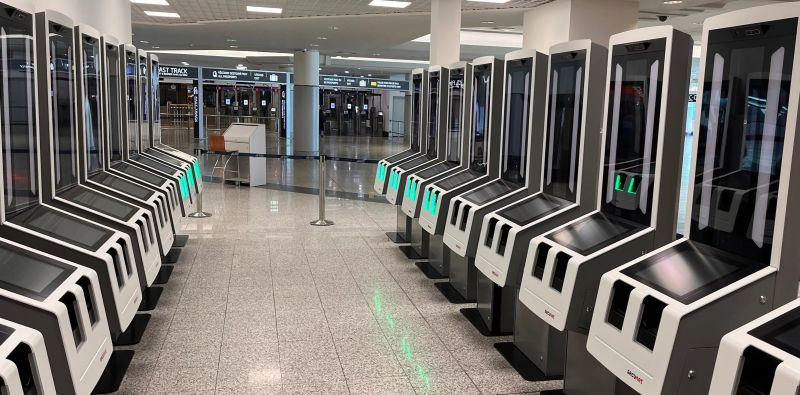
These kiosks collect information before passport control; they do not let you cross the border. After completing the kiosk procedure, continue to a staffed counter, where an officer checks your documents and completes the border check.
EU, EEA, and Swiss citizens do not need EES registration. Non-EU travelers with a qualifying residence permit or long-stay visa also skip the kiosks.
Prague Airport lists additional kiosk exceptions, including children under 12 or below 140 cm, passengers with reduced mobility, crew members, and travelers without biometric passports. Skipping the kiosk does not necessarily mean being exempt from EES itself. Ask airport staff if you are unsure which procedure applies to you.
How Much Time Should You Allow for Passport Control?
Passport-control waiting times vary. Busy periods, several flights arriving together, and the number of passengers needing EES checks can affect the queue. Allow extra time whether you are arriving in Prague or departing from it.
When arriving: Your landing time is not the time you will leave the airport. You still need to leave the aircraft, walk through the terminal, pass border control, and collect any checked baggage. If you are continuing by bus or train, consider a flexible ticket or buying it after passport control. For a booked pickup, check how long the driver will wait and how to contact them if you are delayed.
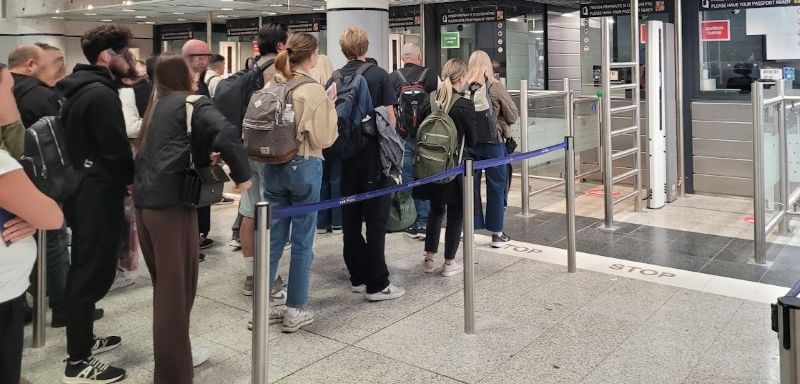
When departing from Terminal 1: Follow your airline’s recommended arrival time and its baggage-drop and boarding deadlines. As a practical buffer, I would allow around three hours before departure, especially with checked baggage or children. This covers the whole departure process—not just passport control.
Prague Airport’s published guidance has recommended arriving at least 2.5 hours before departure, or three hours for long-haul flights requiring passport control.
After passport control, you may have time for shopping or a meal before your gate opens. At Terminal 1, security screening takes place at the gate. Check the departure screens and your airline’s boarding instructions so you know when to be there.
Traveling With Children or Needing Assistance
Children need their own travel documents. Children under 12 who are covered by EES still need a record and facial image, but their fingerprints are not collected. Read more in Travel documents for non-EU nationals
If you have a disability or need assistance with mobility or orientation, arrange assistance through your airline in advance. Prague Airport provides free assistance, including support through passport control and help with baggage reclaim.
Can FastTrack Help You Skip Passport Control?
The airport’s Security FastTrack service provides priority access to security screening in Terminal 2. It does not provide priority passage through Terminal 1 passport control or EES registration. Before buying a service, check exactly which terminal and checkpoint it covers.

