Planning your winter travel in the Czech Republic requires preparing for more than just cold weather. While the country offers stunning snowy landscapes and traditional Christmas markets between November and March, the season also brings freezing temperatures, heavy snowfall in mountain regions, and limited daylight hours. To ensure your trip goes smoothly, foreigners must understand specific local transport regulations, driving laws, and winter transit safety margins before arriving.
Driving in the Czech Republic During Winter
Driving in the Czech winter requires extra care. Roads can freeze quickly, especially in the mountains. Here are the strict traffic laws you must follow for your winter travel in the Czech Republic.
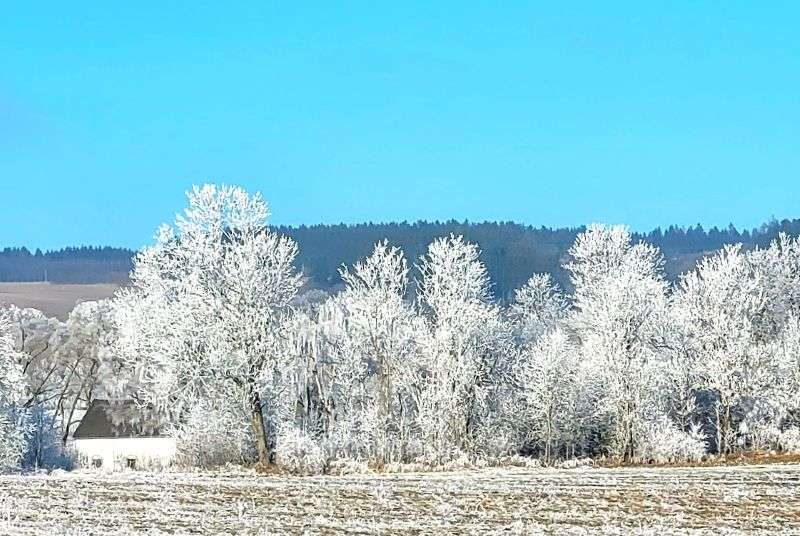
Czech Winter Tire Laws (Nov 1 – March 31)
Between November 1 and March 31, your car must have winter tires if there is snow, ice, or frost on the road.
- The 4mm Rule: The tire tread must be at least 4mm deep. If it is less than that, the tire is illegal for winter conditions.
- Dry Roads: If the weather is warm and the roads are completely dry, you can legally drive on summer tires—unless you see the special sign below.
The “Zimní výbava” (Winter Equipment) Sign
Look out for a round blue sign showing a white car and a snowflake. This sign means winter tires are mandatory under all conditions. Even if the road is completely dry and the sun is shining, you cannot drive past this sign on summer tires.

Can You Use All-Season Tires?
Yes! All-season tires (celoroční pneumatiky) are 100% legal in the Czech Republic, but you must watch out for two important traps:
- The Summer Wear Trap: In summer, all-season tires only need 1.6mm of tread. But the moment it snows or you pass a Zimní výbava sign, they must be at least 4mm deep. If your tires wore down to 3mm during the summer, they are illegal for winter.
- The Letters on the Side: Your all-season tires must have the M+S (Mud + Snow) mark or the Alpine snowflake symbol on the side to count as a winter tire.
Safety Advice: Weather in Czechia changes very fast. Even if you use all-season tires, it is smart to keep a set of snow chains in your trunk for emergencies.
Mountain Roads and Snow Chains
In mountain regions, you will see a blue sign showing a tire with chains. You cannot drive past this sign without putting actual metal snow chains on your tires.
Rental Car Tip: If you rent a car, check that the tires have at least 4mm of tread. Ask the rental company for snow chains, and practice putting them on once while it is dry. Trying to learn during a mountain blizzard is very difficult!
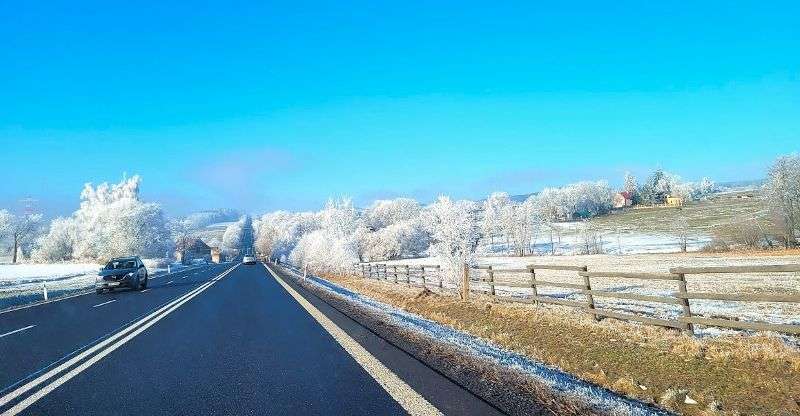
Pro-Tip for Car Rentals: If you are renting a car for your winter travel in the Czech Republic, always verify with the rental company that the winter tires meet the 4mm legal requirement and ask for snow chains to be included in your package. Practice putting them on once while it is dry—attempting to learn for the first time during a roadside blizzard is incredibly difficult.
Rental Car Rules and Pre-Drive Fines
Czech traffic law requires you to completely clear your vehicle’s roof of snow and scrape all ice from the windows before driving. Operating a car with a snow-covered roof that blinds drivers behind you or compromises your own view carries immediate police fines on the spot.
Additionally, ensure your reservoir is filled with winter washer fluid (zimní směs) rated for at least -20°C. Highway salt creates a thick, white film on your windshield rapidly, requiring continuous cleaning to maintain visibility.
Public Transport Options
When it comes to public transport during your winter trains are generally your most reliable asset. The Czech rail network is exceptionally dense, and track-clearing crews prioritize main lines over secondary highways during heavy snowstorms.
Dealing with Winter Train Delays (České dráhy & RegioJet Rules)

While trains usually run during cold snaps, sub-zero temperatures can cause track or electrical failures.
- Monitoring Delays: Do not rely on static paper schedules. Use the official Můj vlak (My Train) app for national carrier České dráhy (ČD), or the broader IDOS.cz portal to monitor platform shifts and track delays in real-time.
- Long-Distance Comfort: For cross-country transit, booking higher-tier services like RegioJet or the SC Pendolino guarantees reliable internal heating and stable amenities.
- Station Safety: Concrete train platforms glaze over instantly during hard frosts. Walk cautiously when changing platforms (nástupiště).
For complete structural details on buying tickets and navigating the rail system, see our comprehensive How to Use Trains in Czech Republic: Companies, Apps & More.
Navigating Regional Buses and Mountain Ski Buses (Skibusy)
While trains serve major hubs, reaching smaller mountain villages or ski resorts requires relying on regional buses. Winter bus travel demands flexibility; mountain routes face frequent delays due to icy, narrow passes.
- The Request-Stop Rule: Many rural and mountain stops are designated as na znamení (on request). If you are inside the bus, you must press the “Stop” button well ahead of your station to give the driver enough distance to brake safely on slick pavement. If you are waiting at the stop, stand clearly visible to the oncoming bus.
- Ski Buses: In major mountain resorts, specialized ski buses (skibusy) operate to shuttle skiers between towns and lift gates. Check local regional transport maps, as standard integrated transport passes (like extended PID zones) do not always cover private resort lines.
Practical Winter Transit Safety for Foreigners
Beyond vehicles and schedules, the physical environment of a Central European winter imposes strict constraints on your travel itinerary.
Managing Short Daylight Hours in Your Travel Itinerary
In December and January, daylight fades completely by 4:00 PM. This short window completely shifts your safety margins. Driving on unlit, twisting regional roads or hiking down from mountain viewpoints becomes highly hazardous after dark. Plan all transit legs to conclude before mid-afternoon.
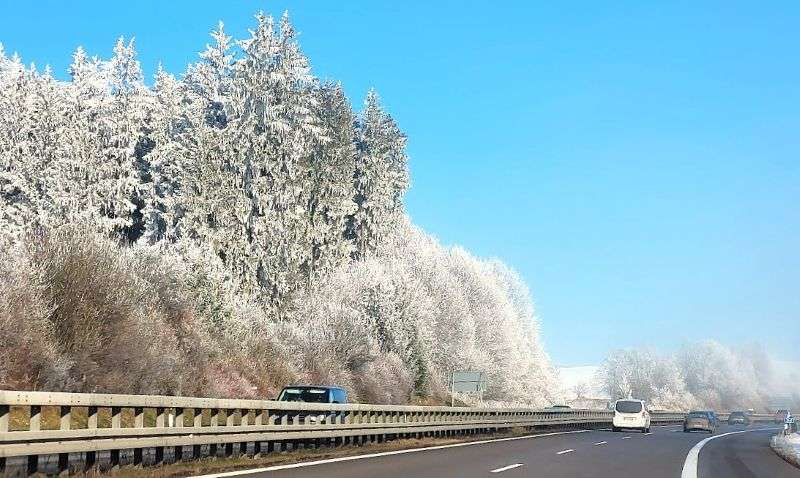
Emergency Apps and Black Ice Hazards
Technology serves as a critical safety buffer when navigating isolated winter routes:
- Záchranka: This is the official emergency app used by Czech medical and mountain rescue services. Pressing the central red button alerts rescuers and automatically transmits your exact GPS coordinates—vital if you break down on an unlit secondary road or get stranded in a blizzard.
- Aladin & Windy: Aladin is the precise weather model managed by the Czech Hydrometeorological Institute, providing highly localized forecasts for small municipalities. Windy gives detailed, real-time tracking of oncoming wind gusts and snow accumulation.
- Black Ice (Náledí): Be exceptionally careful with sidewalks and roads that look deceptively wet when temperatures hover around freezing. This is often náledí (black ice), which requires immediate reduction of driving speeds and careful foot placement. Cold weather also drains phone batteries quickly; keep your device in an inside jacket pocket close to your body heat.
Essential Czech Winter Vocabulary for Travelers
If you are traveling in the Czech Republic during winter, you will see these words on highway screens, station boards, and mountain trail signs.
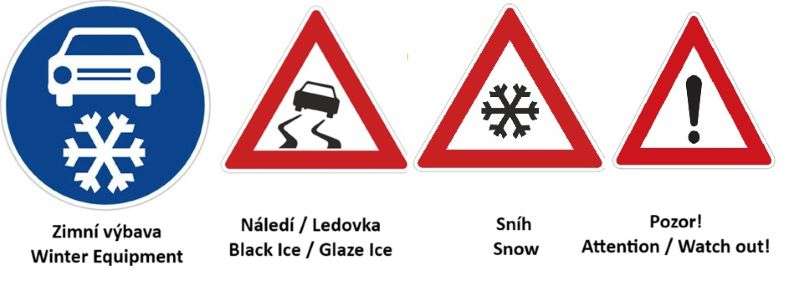
Transport & Roadway Signs
| Czech Term / Sign | English Meaning | Context / Practical Use |
| Náledí / Ledovka | Black Ice / Glaze Ice | Found on highway overpasses and unshaded sidewalks; highly hazardous. |
| Zimní výbava | Winter Equipment | Blue sign indicating mandatory winter tires regardless of current road conditions. |
| Zpoždění | Delay | Displayed on station boards; watch for the number of minutes (minut). |
| Nástupiště | Platform | Crucial at train stations; check digital boards for sudden platform changes. |
| Sníh | Snow | Expect reduced speed limits and potential highway delays (kolony). |
| Sůl | Salt | Road grit that creates a blinding white film on your windshield. |
Signs In the Mountain Regions
| Czech Term / Sign | English Meaning | Context / Practical Use |
| Horská služba | Mountain Rescue | Yellow and red signs in alpine regions; contact immediately via the Záchranka app if lost. |
| Lanovka | Cable car / Ski lift | Subject to immediate closure during high winter winds. |
| Sjezdovka | Ski slope | Approaching roads are often covered by the Zimní výbava mandate. |
| Pozor! | Attention / Watch out! | Frequently posted near buildings warning of falling icicles (rampouchy) or slippery pavement. |
Crucial Phrases for Transit Emergencies
- Máte zimní směs? – Do you have winter washer fluid? (Essential at gas stations if your reservoir runs dry).
- Cesta je kluzká. – The road/path is slippery.
- Kdy jede další vlak? – When does the next train leave?
- Potřebuji pomoc. – I need help.
- Kde je nejbližší nemocnice? – Where is the nearest hospital?

